
Mastering Submersible Pumps: A Comprehensive Engineering Guide for Industrial Efficiency
Introduction: The Silent Workhorse of Modern Industry
In the world of industrial fluid management, few pieces of equipment carry as much responsibility as the submersible pump. Whether you are dealing with wastewater treatment, mining operations, or complex chemical processes, the ability to move fluids reliably—often in harsh or submerged environments—is not just an operational necessity; it is a fundamental requirement for plant efficiency.
At Pishro Abzar Bandar, our experience in the field has shown us that the difference between a system that runs for years and one that fails in months comes down to a fundamental understanding of submersible pumps. These are not merely off-the-shelf commodities; they are precision-engineered solutions that must be matched to specific hydraulic, chemical, and physical environments.
This guide is written for engineers, procurement managers, and maintenance teams who demand more than just marketing copy. It is designed to provide you with the deep technical insights required to select, install, and maintain these systems with confidence. We move beyond the basics, exploring the physics of submerged liquid displacement and the critical factors that dictate the longevity of your assets.
Defining the Core: What Are Submersible Pumps?
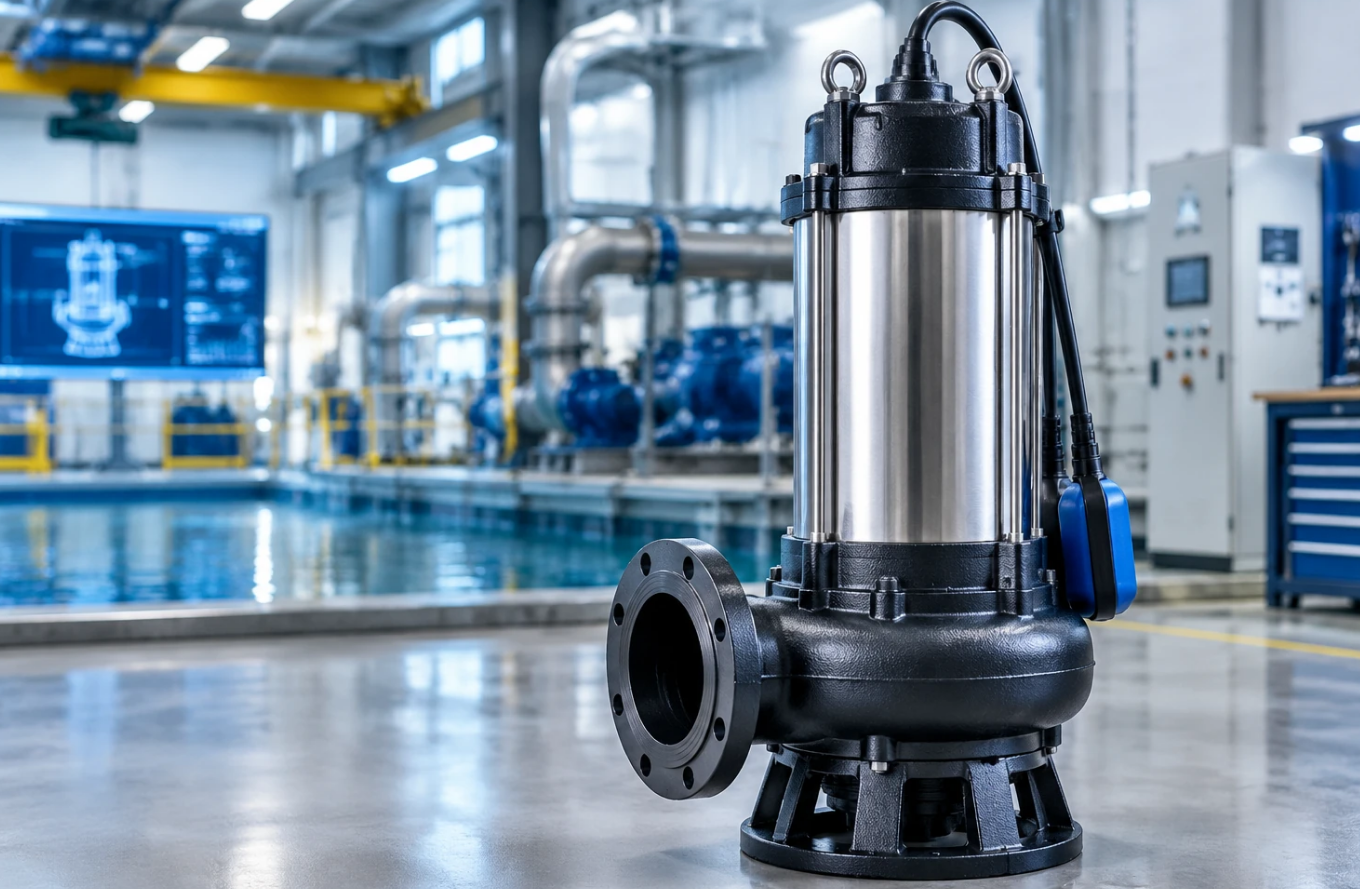
A submersible pump is a centrifugal device equipped with a hermetically sealed motor that is closely coupled to the pump body. The entire assembly is submerged in the fluid to be pumped. Unlike traditional vertical turbine or end-suction pumps that rely on suction lift, submersible units operate by pushing fluid, effectively eliminating the risk of cavitation associated with high-suction lift requirements.
The primary advantage is simple: because the pump is submerged, it does not require priming. This makes it an ideal choice for lift stations, sump drainage, and deep-well applications. However, the true complexity lies in the seal design, the cooling method (often the pumped fluid itself), and the material compatibility with the medium being handled.
The Evolution of Submersible Technology
Historically, pumping systems were cumbersome, requiring complex shafting or dry-pit installations that were prone to mechanical misalignment. The transition to modern submersible designs has been driven by the need for space efficiency and the ability to operate in flooded conditions without catastrophic failure.
Today, we see the integration of intelligent sensors—vibration monitoring, temperature probes, and moisture detection—directly into the motor housing. This technological evolution allows for predictive maintenance, shifting the paradigm from reactive repairs to proactive management. If your current fleet lacks basic moisture sensors, you are operating with an unnecessary risk factor.
Critical Applications in Modern Industry
The versatility of submersible pumps makes them indispensable across various sectors:
- Wastewater and Sewage: Handling solids and fibrous materials without clogging is the paramount challenge here, requiring specialized vortex or grinder impellers.
- Mining and Dewatering: In environments where slurry and debris are constant, high-chrome or stainless steel construction is non-negotiable to prevent impeller erosion.
- Petrochemical Processing: Explosive atmospheres require explosion-proof (EX) rated motors, a critical safety specification that cannot be bypassed.
- Steel and Industrial Cooling: In steel plants, moving high-temperature fluids or coolant recycling Pumps
Equipped with recessed impellers (vortex) or channel impellers, these pumps allow solids to pass through without the wrong pump type is the most common cause of premature failure. We categorize them generally into:
1. Drainage Pumps
These are workhorses for clear or slightly dirty water. They are cost-effective but lack the robust impeller designs needed for solids handling. Use these exclusively for clean water sumps.
2. Sewage/Solids Handling Pumps
Equipped with recessed impellers (vortex) or channel impellers, these pumps allow solids to pass through without touching the impeller vanes, drastically reducing the risk of blockage.
3. Grinder Pumps
For applications where the fluid contains significant amounts of soft solids or textiles, grinder pumps act as a preliminary processing unit, pulverizing waste before it enters the discharge piping.
Selection Criteria: How to Engineer the Perfect Fit
When selecting a unit, rely on the “Three Pillars of Selection”:
- Hydraulic Requirements (Duty Point): Do not just match the flow rate. You must calculate the Total Dynamic Head (TDH), which includes static lift, friction loss in pipes, and fittings. If the pump is forced to operate far from its Best Efficiency Point (BEP), you will experience vibration, increased seal wear, and potential motor burnout.
- Medium Characteristics: Is the fluid abrasive (sand/slurry)? Is it corrosive (low/high pH)? The materials—cast iron, stainless steel, or specialized duplex alloys—must match the chemical makeup of the fluid.
- Installation Method: Will it be a “free-standing” installation or a “guide rail” system? Guide rail systems are essential for deep-pit maintenance, allowing the pump to be lifted without draining the tank.
Expert Insight: Always check the Net Positive Suction Head (NPSH). Even though the pump is submerged, insufficient head can lead to localized boiling (cavitation) at the impeller eye, which will destroy even the highest quality pump in a matter of weeks.
Installation and Operational Best Practices
Installing a submersible pump is more than just lowering it into a hole. It is about environmental management:
- Electrical Integrity: The cable entry is the most common point of moisture ingress. Use high-quality potting compounds and ensure the junction box is properly sealed against humidity.
- Cable Management: Never lower or lift the pump by the power cable. Use a stainless steel lifting chain. This seems obvious, yet we see broken cables and damaged connections daily in industrial settings.
- VFD Compatibility: If using a Variable Frequency Drive, ensure the motor is rated for VFD duty. High-frequency switching can cause insulation breakdown if the motor is not designed to handle the harmonic distortion.
Troubleshooting: The “Boots on the Ground” Approach
When a pump fails, do not jump to motor replacement. Follow a methodical diagnostic process:
- Step 1: Check Current Draw. Is the motor pulling high amps? This indicates mechanical resistance, likely a clogged impeller or worn bearings.
- Step 2: Inspect the Oil Chamber. If the oil is milky, the mechanical seal has failed. This is the most critical diagnostic indicator.
- Step 3: Verify the Power Supply. Are you getting balanced voltage across all three phases? Unbalanced voltage (even by a few percent) causes rapid overheating in submersible motors.
Emerging Trends and Sustainability
The future of fluid management is IoT-enabled pumping. We are moving toward systems that communicate their own health status to a centralized dashboard. Predictive analytics can now detect cavitation patterns or bearing degradation before the pump fails, allowing maintenance teams to schedule downtime rather than reacting to a flood.
Furthermore, sustainability is a driving force. Modern impellers are being designed for higher efficiency, consuming up to 20% less energy than models from a decade ago. For high-volume operations, this translates into massive operational expenditure (OPEX) savings.
Case Study: Optimizing for Steel Plant Reliability
In our work with large-scale industrial facilities (such as steel manufacturing), we encountered a scenario where cooling water pumps were failing every four months due to abrasive sludge. The initial solution was to upgrade the pumps to a more robust brand, but failure rates remained high.
Our engineering team performed a site audit and identified that the issue was not the pump, but the sump geometry, which created eddies and increased sediment concentration at the suction intake. By redesigning the baffle plates within the sump and switching to a vortex-style impeller that resisted clogging, we extended the mean time between failures (MTBF) from 4 months to over 24 months.
Lesson: Sometimes, the “pump problem” is actually a “system design problem.”
Conclusion: Partnering for Performance
Submersible pumps are the lifeblood of industrial processes. They operate under the surface, often ignored until they fail. However, by understanding the nuances of hydraulic design, prioritizing material compatibility, and maintaining a disciplined approach to installation, you can transform these assets from maintenance burdens into reliable, long-term drivers of productivity.
At Pishro Abzar Bandar, we believe that providing equipment is only half the job. Providing the expertise to optimize that equipment for your specific environment is where true value is created. Whether you are addressing a critical infrastructure tender or optimizing your own facility’s fluid handling, the right pump is the one that works quietly, efficiently, and indefinitely.
Ready to optimize your fluid management systems? Contact our technical support team today to discuss your specific site requirements and discover the difference that precision-engineered pumping solutions can make for your operations.
FAQ: Frequently Asked Questions
1. How do I determine the right size for a submersible pump?
You must calculate your Total Dynamic Head (TDH) and required flow rate (GPM or m³/h). Once you have these two figures, map them onto the manufacturer’s “Pump Curve.” The ideal pump will have its “Best Efficiency Point” (BEP) near your operating duty point. Always size for the system demand, not just the pipe diameter, to ensure long-term efficiency and prevent premature motor failure.
2. Why does the mechanical seal on my pump keep failing?
Seal failure is usually caused by three factors: dry running, abrasive fluid, or excessive heat. Ensure your pump is never running “snoring” (taking in air) as this destroys seals quickly. If you are pumping abrasive slurries, verify that you are using silicon carbide/silicon carbide seals, which are far more resistant to wear than carbon/ceramic options. Check the oil chamber for moisture to identify if the seal breach is structural or environmental.
3. Can I use a regular submersible pump for chemical applications?
No. Standard submersible pumps are designed for water or sewage. Chemical applications require specific materials—such as 316 stainless steel, Hastelloy, or specialized elastomers (Viton/EPDM)—that can withstand corrosive attacks. Using a standard cast-iron pump in a chemical environment will result in housing corrosion and catastrophic failure. Always consult your chemical compatibility chart and the pump manufacturer’s material specifications before installation.


